Waste management

We recognize the broader role we play in conserving natural resources to support a circular economy. Tracking, managing, and reducing waste streams plays a large part of our commitment to protecting our planet.
We take a site-specific approach driven by regional regulatory requirements to ensure compliance.
Our waste minimization guidelines prioritize best practices and clarify responsibilities for sites to manage and reduce waste.
Reducing our waste offers numerous direct and indirect benefits, such as increasing material efficiency, decreasing raw material purchases, and reducing our Scope 3 emissions. We understand the importance of addressing challenges and opportunities to make a positive impact and uphold our commitment to waste reduction and a circular economy.
Our waste minimization plan
As we integrate our sustainability strategy across our enterprise, we are embedding waste management plans into our core operations. We use a centralized global data system and process to capture and manage environmental data from our manufacturing sites. This data allows us to focus on sites and processes with the largest waste intensity and environmental impact.
Once assessed, Arxada’s prioritization scheme is applied. We consider contributing factors, including regulatory requirements, risk reduction, and environmental benefits. Once suitable waste streams for reduction are identified, our sites implement our waste minimization hierarchy with the goal of achieving maximum sustainable waste reduction.
To ensure our waste management is aligned with local regulations, best practices, and latest technologies, our site teams periodically review the performance of waste management practices to advance progress.
Waste management in action
The classification of waste as hazardous or non-hazardous at our facilities depends on applicable local regulations.
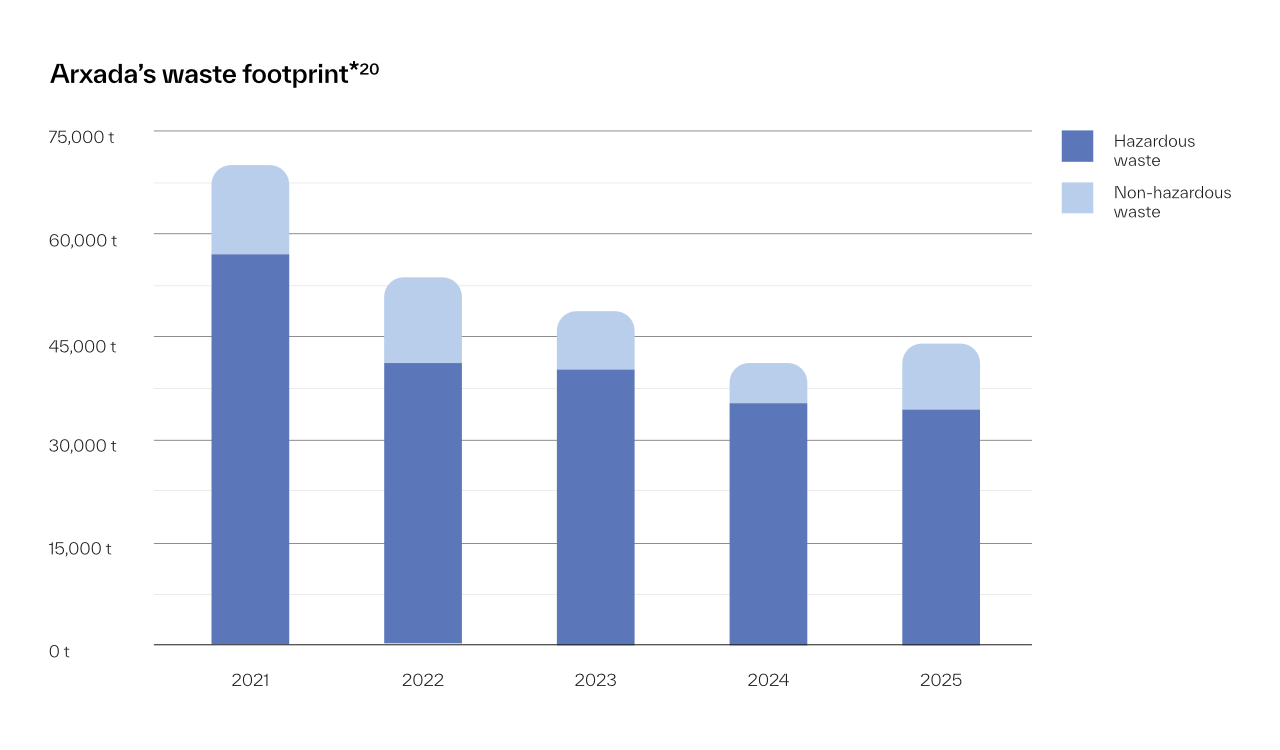
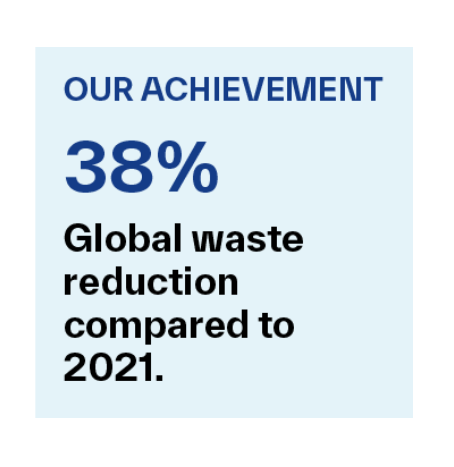
In 2025, we continued our focused waste reduction projects as part of our ongoing process optimization initiatives. We have achieved a 38% global reduction in waste compared to 2021, primarily driven by waste reduction activities at our Visp location.
Looking forward to 2026
In 2026, we will continue identifying opportunities to reuse and recycle materials, aiming to minimize resource consumption and advance our goal of operating in a more circular manner. We will drive sustainable waste reduction by expanding our reduction plans across all sites. At locations where further waste prevention and reduction are not feasible, we will continue progressing toward circularity by seeking alternatives for the byproducts generated in our processes. This includes repurposing byproducts within our own operations or selling them to other companies as inputs for their processes.

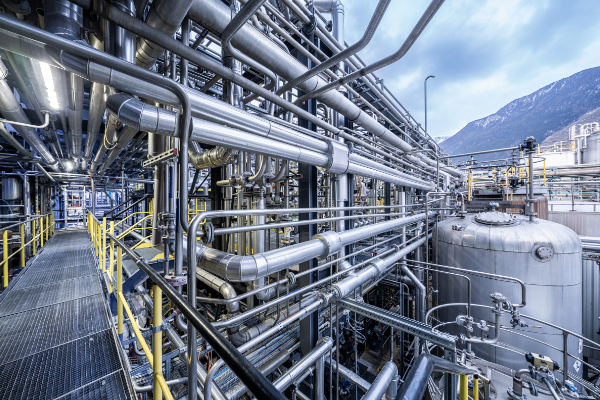
New vacuum heat pump evaporator enables 100% heat recovery improving efficiency in Visp
Foramsulfuron campaigns in our plant in Visp generate approximately 3000 t/year of wastewater containing the highly ecotoxic intermediate Aminoasura. It is currently treated via an energy-intensive conventional evaporation taking about 100 days per year.
We have implemented the use of a new, more efficient vacuum heat pump evaporator, which enables near 100% heat recovery by reusing condensation heat within a closed-loop system and preheating incoming wastewater. This significantly reduces energy demand while fitting compactly into the multi-purpose plant and offering spare capacity for other campaigns.
Additional savings come from replacing electricity-intensive brine cooling with non-refrigerated Rhone water, further lowering power consumption. Overall, the solution delivers substantial energy efficiency gains and improves the sustainability of wastewater treatment.
Caustic storage system improvements in Rochester site
An overflow event involving approximately 50,000 lbs of sodium hydroxide was successfully contained and managed, with nearly all material recovered and reintroduced into the process—resulting in negligible waste generation.
In response, enhanced engineered and procedural controls were implemented, including high-level interlocks with automated block valves, upgraded alarm systems, and strengthened operating procedures and training. These improvements significantly reduce the risk of recurrence, enhance process reliability, and minimize future material loss.

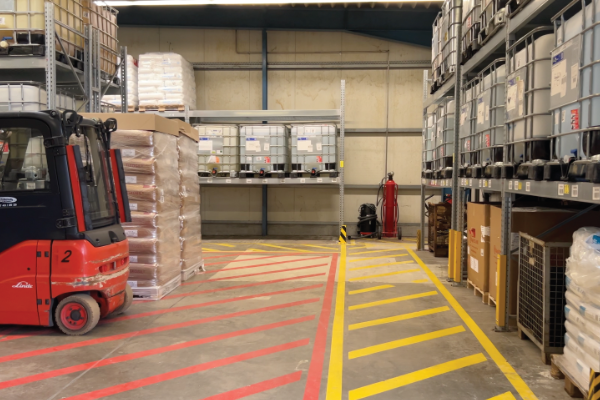
Horhausen site logistics optimization initiative reduces approximately 50% plastic use per pallet
A logistics optimisation initiative achieved a 36–49% reduction in plastic use per pallet while maintaining performance under operational conditions. The change also reduced annual material consumption by 58% and delivered positive cost savings per site. Overall, the initiative
enables more than 40% lower plastic use and associated CO₂ emissions, supporting waste reduction and climate targets.
Waste compaction initiative improves recycling and transportation efficiency in Rochester site
The waste compaction initiative improved recycling and transportation efficiency through increased material densification and payload utilization, reducing haul frequency by approximately 33% without additional infrastructure. Drum recycling throughput increased from 3,520 lbs to 36,100 lbs year-to-date, while mixed metal recycling increased from 40,020 lbs to 67,900 lbs year-to-date. Municipal solid waste loads increased to approximately 3.0 tons/load, reducing transportation demand by 30–35% on average. On-site compaction via the Crushr service also delivered environmental benefits, including avoidance of approximately 4–5 MSW haul events annually and an estimated reduction of 0.3–0.4 metric tons of CO₂ emissions per year.

19 Recycling includes composting but does not include incineration.
20 The scope of our waste data includes all manufacturing sites with FTE > 10 (note, Auckland, New Zealand and Trentham, Australia manufacturing sites are included even though they have less than 10 FTEs) and Pilot Manufacturing sites with FTE > 45. Waste from offices is not included, as this is not material to Arxada's overall waste.
* Metrics have been assured by ERM CVS. For more information, please see the "External Assurance Report" which details the scope, activities and conclusion of their engagement. Arxada’s Basis of Reporting document outlines the scope, principles, and methodologies Arxada applies in preparing the environmental and safety data for this report and other public communications.